Why Community Is Your Best Preparation for What's Coming
The real survival plan is not in your pantry or your gun safe. It is in your relationships. And that means you are going to have to get over yourself.
You have probably already lived through a version of this. A week without power after a bad storm. The early months of a pandemic when store shelves were stripped bare. A supply chain slowdown that stretched into months. A string of local businesses closing that changed the feel of your town without anyone really announcing it.
Most of us noticed the same thing in those moments: the people who came through best were not the ones with the most stuff. They were the ones with the most people.
That is not a feel-good observation. It is the whole point of this post.
It Always Starts Small
Before we get to the bigger picture, start where most people actually begin, which is the small and temporary stuff.
A power outage that lasts long enough that everything in your fridge goes bad. A water main break that leaves your street dry for three days. A trucking strike that empties regional grocery stores for a week. A flood or ice storm that makes roads useless longer than anyone expected.
These are not worst-case scenarios pulled from a disaster movie. All of them have happened to real people in recent years, and they are happening more often.
Most of the time, things get resolved. Power comes back. Shelves restock. Life returns to normal. But those moments show you something easy to miss when everything is running fine: most people have no real plan for even a short disruption to the systems they depend on every single day.
We walk around with the quiet assumption that clean water, electricity, and groceries are permanent. They are not. They are infrastructure, and infrastructure breaks.
Most people figure that out the hard way, in the middle of a problem. The ones who come through it better are the ones who took that lesson seriously before the next one showed up.
The question is not whether disruption is coming again. It is whether you face it alone or alongside people who already know you, already trust you, and have already thought through what to do.
The Bigger Picture Nobody Wants to Say Out Loud
Here is where some people check out, but stay with it for a minute because it matters.
The small disruptions above can usually be managed with a little extra food in the house and a full gas tank. What is further down the road is a different kind of problem, and people who study this for a living, across the political spectrum, have been saying so for years.
The systems most of us grew up taking for granted are under serious strain. Global supply chains that assumed stable international cooperation have already shown how fragile they are. Democratic institutions in multiple countries are struggling in ways that would have seemed far-fetched a decade ago. The wealth gap in most developed nations has reached the kind of levels that, historically, tend to produce real social unrest before they get better. Climate disasters are no longer rare events. They are now a regular feature of the calendar.
None of this is a political statement. It is pattern recognition, and the pattern is not subtle.
The window to prepare for any of this is right now, while things are still mostly functional, while you can have a calm conversation with your neighbors without it being an emergency, while you can think clearly and make deliberate choices instead of reacting to something that is already happening.
An ounce of preparation is more valuable than a pound of response. The time to figure out who in your circle knows first aid, who has land with a water source, and who knows how to grow food is before you need that information. Not the week after the first domino falls.
What Preparation Is Not
The word “prepper” has done serious damage to the actual concept of being prepared.
For most people, that word brings up a specific image: an armory, a bunker, a garage stacked with five-gallon buckets of freeze-dried food, a household that plans to survive by making sure everyone else cannot get in. That is not preparation. It is a fantasy, and an expensive one.
Think about it practically. No single household has every skill it will ever need. No one person can stand guard, grow food, purify water, care for sick family members, fix broken equipment, and hold themselves together mentally, all at the same time, for an indefinite stretch. The math does not work. It never has.
We are social animals. Humans have survived hard times for tens of thousands of years, and it has never been because one household stockpiled enough and outlasted everyone else. It has always been because people worked together. That is not idealism. That is history.
The lone fortress fantasy is also, bluntly, boring and exhausting and not a life anyone actually wants to live. Real preparation is more interesting than that, and it starts with the people around you.
The Village Is the Strategy
Real preparation looks like community. Specifically, it looks like knowing your neighbors well enough to have honest conversations about what everyone brings to the table.
Who in your extended circle is a nurse or an EMT? Who knows how to grow things? Who can fix an engine or wire an outlet? Who has a truck, a chainsaw, a generator? Who has land? Who has kids or elderly parents who will need extra help? These are not paranoid questions. They are the questions people used to ask each other as a matter of course, before we all retreated behind our screens and our garage doors.
In most of human history, and still in many parts of the world, this is just how communities worked. People knew what their neighbors were good at. They traded skills and labor and food. They looked after each other’s kids and aging parents. They built things together that none of them could have built alone. When something went wrong, the community absorbed the shock because the community was real and connected and practiced.
That social fabric has gotten thinner in the United States over the past few decades. The average American today knows fewer neighbors, belongs to fewer local organizations, and has fewer close relationships outside the immediate family than people did a generation ago. That is not just sad. It is a practical problem with practical consequences when things go sideways.
Here Is the Hard Part
Building that community means you are going to have to let go of some things.
Specifically, it means you may have to work alongside people you disagree with. And this is where both sides of the political divide in this country are getting it completely wrong in ways that will cost them dearly.
If you are on the left and your position is that you will not associate with someone whose values you find morally bankrupt, or that the presence of an AR-15 in someone’s home makes them a person not worth knowing, you are building a community with a very short guest list. You are also cutting yourself off from people who have skills and resources and genuine goodwill, just not your particular politics. The person you have decided to write off might be the only one on your street who knows how to purify water or can set a broken bone.
If you are on the right and your line is that you will not associate with anyone who votes differently than you, or that being a Christian means you share a single political identity with every other Christian, you are doing the same thing. You are shrinking your circle based on a litmus test that has nothing to do with whether someone will show up for you when it matters. The neighbor you have been avoiding might be the best gardener on your block and a genuinely loyal person in a crisis.
The hard truth is this: when the power goes out for two weeks, nobody is going to ask who you voted for. Nobody is going to care about your bumper stickers or your social media opinions or your theological positions on contested questions. They are going to ask who knows what to do, who has what is needed, and who can be trusted to follow through.
Your community does not need to share your worldview. It needs to be functional, skilled, and trustworthy. Those are different things. And you can disagree with someone about almost everything and still build a reliable relationship based on mutual respect and shared practical interest.
People have been doing exactly that for most of human history. It is only recently that we have decided ideological purity is more important than functional relationships, and that trade has not worked out well for anyone.
How to Start
You do not need to call a meeting or hand out pamphlets or make it weird.
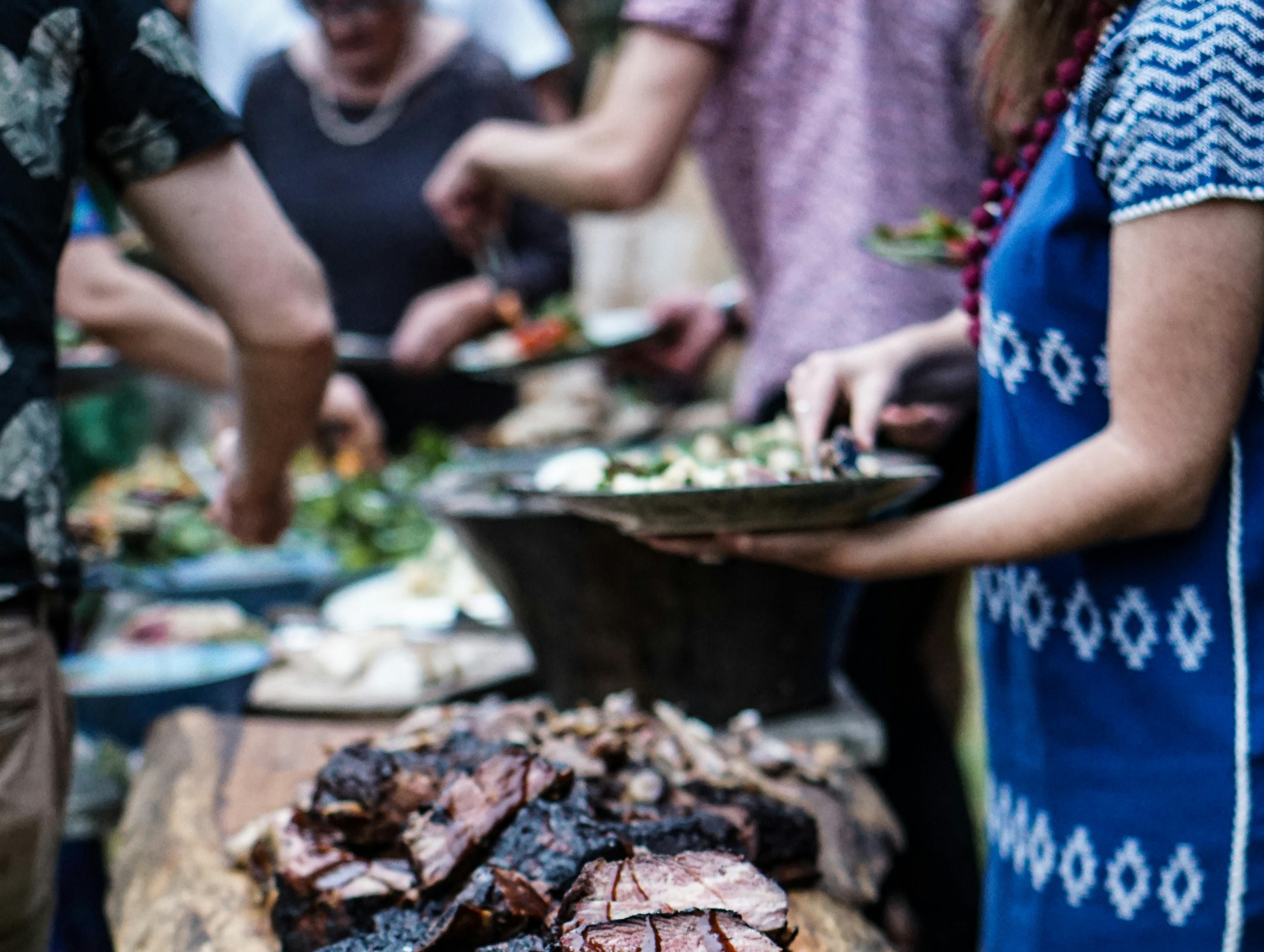
A neighborhood cookout is preparation. A community garden is preparation. Lending a tool and following up about it is preparation. A group text with five neighbors who actually check on each other is preparation.
The point is to build the relationships first, before you need them, so that the harder and more specific conversations are possible later. You cannot have the serious conversation with people you do not know and trust. So you build the trust first and let the rest follow.
At some point, when the relationship is solid enough, you have the more direct conversations. Who has what skills. What everyone’s household situation actually looks like. What the plan is if cell service goes down. What people need and what they can offer. None of that has to be dramatic. It can just be honest.
The Timing Is the Thing
There is a version of this conversation that happens after the domino falls. It sounds like: why didn’t we talk about this sooner?
There is a version that happens before. It sounds like: I’m glad we already worked this out.
The gap between those two versions is not heroic preparation or years of planning. It is a handful of honest conversations and a few relationships treated with enough care that they actually hold under pressure.
The disruptions that are coming, small or large, temporary or structural, will be handled by communities far more than by individuals. The people who do best will not be the most heavily armed or the most stocked. They will be the ones who built something real with the people around them.
That is available to you right now. It does not require money or a political position or a particular set of beliefs. It requires showing up, being useful, and being willing to know and be known by the people near you.
The time for that is now. Not when the lights go out. Now.