Which Calibers Do You Actually Need?
Common, Available, and Useful. The Only Three Words That Matter When Choosing a Caliber


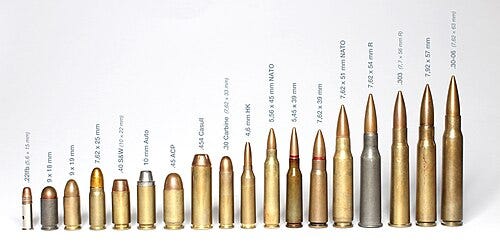
The internet has been fighting about this for decades and somehow made it harder to get a straight answer. Forums full of people calling each other idiots. YouTube comment sections that would make your grandmother weep. Guys who have never been in a single serious situation telling you that your choice of cartridge will get you killed.
Here is the thing: most of that debate is happening in the wrong context entirely.
If you are preparing for a world where things go sideways for an extended period, caliber selection is not primarily a ballistics question. It is a logistics question. And once you start looking at it that way, a lot of the noise clears up fast.
The Only Question That Actually Matters
Before we get into specific cartridges, there is one question worth asking about every single caliber you are considering: if you cannot order more of it, how easy is it to find?
That is the whole framework. Everything else is a detail.
In a stable world with next-day shipping and a gun store on every other corner, you can shoot whatever you want. Boutique cartridges, wildcats, stuff that requires you to handload every round. Knock yourself out. But if you are thinking about preparedness in any serious way, you have to think about what happens when the supply chain is broken, stores are closed or empty, and the only ammunition available is whatever is already out there in circulation.
That changes the math on almost every caliber debate you have ever read.
Commonality is not just a convenience. It is a preparedness argument. The more common a cartridge is, the more likely it is to show up in the places you might be able to source it: other people’s homes, sporting goods stores, police or military surplus, trade with neighbors. A cartridge that is technically superior but rare in your region is a liability the moment resupply becomes uncertain.
With that in mind, let’s go through the major debates.
Handguns: 9mm vs .45 ACP
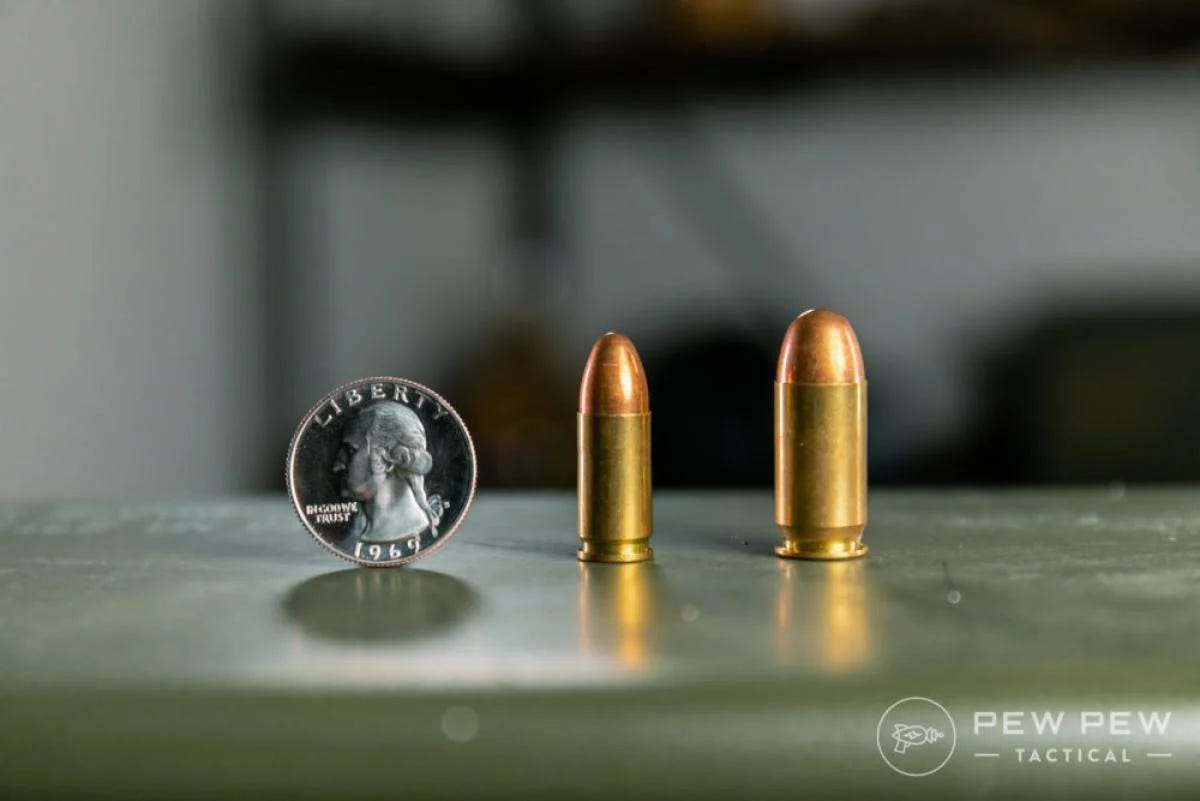
This one has probably generated more heat than any other caliber argument in the last fifty years, and at this point the ballistic case is largely settled.
Modern 9mm defensive ammunition has closed most of the performance gap that used to exist between the two cartridges. The FBI switched to 9mm in 2015 after an extensive study, and most major law enforcement agencies have followed. That is not a marketing decision. Those are organizations with a very practical interest in what their rounds actually do.
From a preparedness standpoint, the case for 9mm is straightforward. It is the most common handgun cartridge in the United States by a significant margin. It is produced by more manufacturers, stocked in larger quantities, and found in a wider range of firearms than any other pistol round. When the shelves were stripped bare during the ammunition shortages of 2020 and 2021, 9mm came back first and in the largest quantities, because demand drives production and 9mm demand is enormous.
.45 ACP is a fine cartridge with a legitimate history and a loyal following. If you already own a .45 and shoot it well, that is worth something. Familiarity and comfort with your firearm matters. But if you are starting from scratch and thinking about this through a preparedness lens, 9mm is the easier answer to defend.
Rifles: The .308/7.62 vs 6.5 Creedmoor Debate
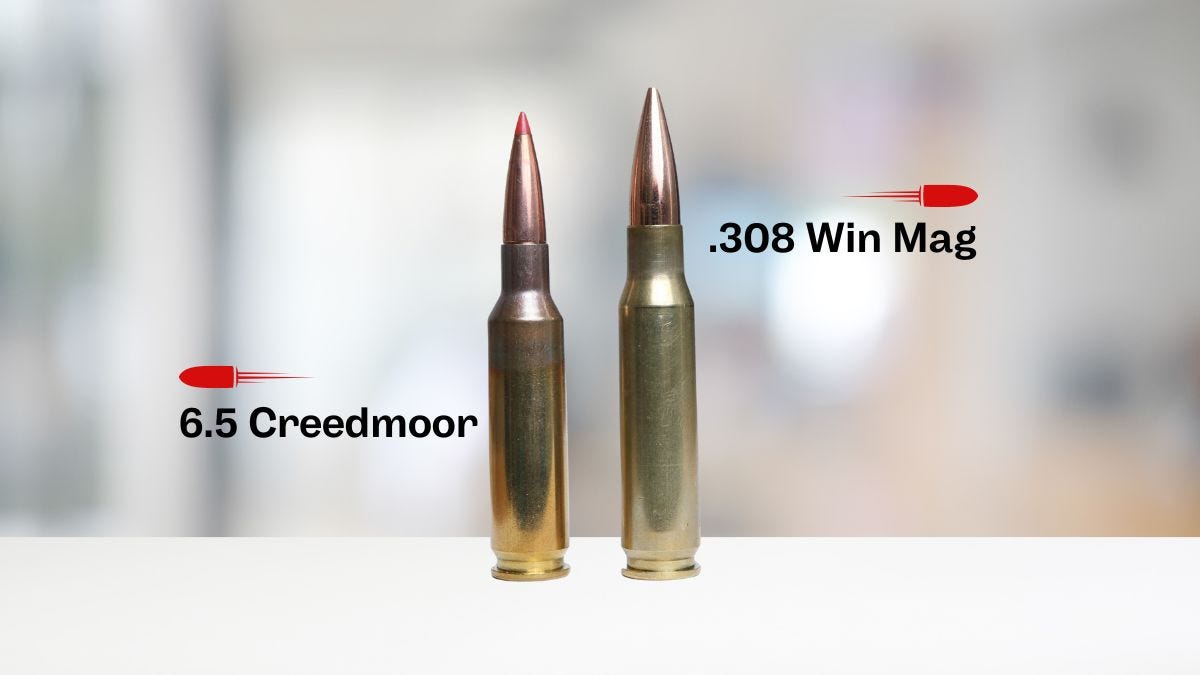
This one is newer and has gotten loud fast, partly because 6.5 Creedmoor is genuinely impressive on paper.
At distance, particularly past 500 yards, 6.5 Creedmoor outperforms .308 Winchester in several measurable ways. It bucks wind better, drops less, and does it with less felt recoil. If you are a competitive long-range shooter, these things matter and the numbers are real.
But here is the preparedness context that most of that debate ignores.
.308 Winchester, which is effectively the civilian version of 7.62x51 NATO, has been in widespread military and civilian use since the 1950s. It is one of the most produced rifle cartridges in the world. It is stocked in virtually every gun store, every sporting goods chain, and a large percentage of American homes that contain a centerfire rifle. Surplus military ammunition in 7.62x51 exists in enormous quantities.
6.5 Creedmoor has grown fast and is now widely available under normal conditions. But “widely available under normal conditions” is exactly the scenario you are not planning for. In a serious disruption, you want the cartridge that has seventy years of production behind it and is sitting in warehouses, stores, and homes all over the country.
The honest answer is that for most real-world preparedness scenarios, .308 at the ranges most people will ever actually shoot is more than adequate. The edge 6.5 Creedmoor has at distance is real, but it is an edge that matters in a narrow set of circumstances, and it comes at a logistics cost worth thinking about seriously.
The 5.56/.223 Question
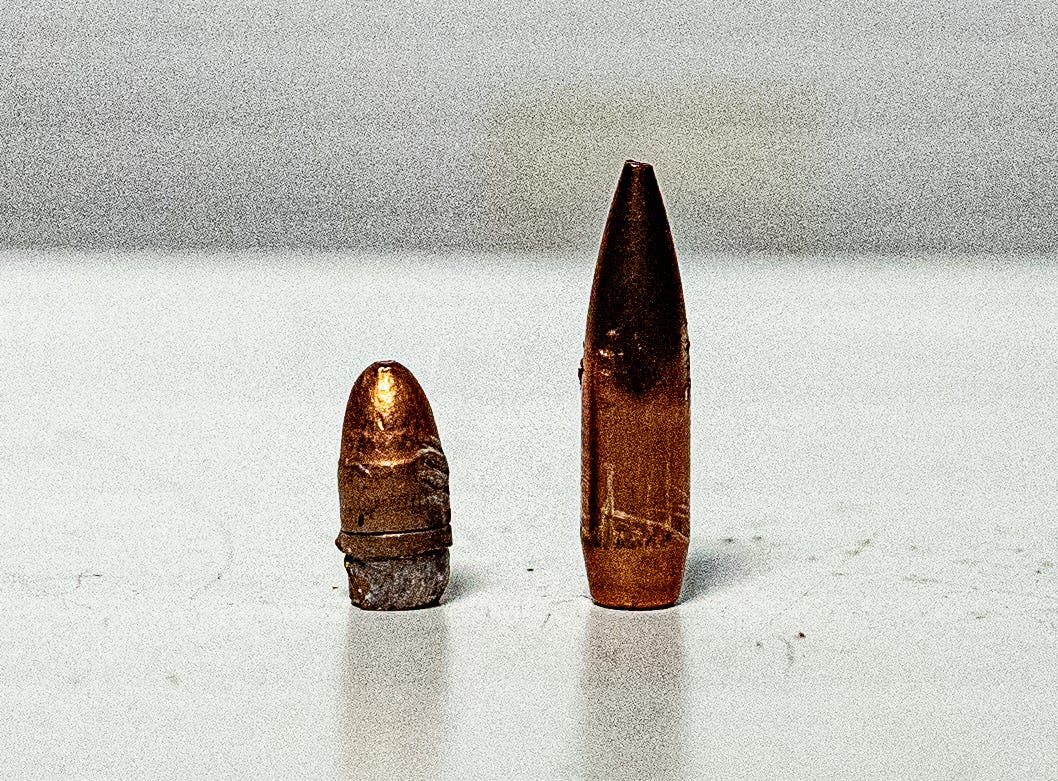
This one deserves its own section because the AR-15 platform is the most common centerfire semi-automatic rifle in the United States, and that fact alone makes 5.56 NATO and .223 Remington worth understanding.
First, the practical distinction: 5.56 NATO and .223 Remington are not identical, but a rifle chambered in 5.56 can safely fire both. A rifle chambered in .223 should not fire 5.56. If you are buying a rifle and you want flexibility, chamber it in 5.56.
From a preparedness standpoint, 5.56/.223 has one of the strongest arguments of any rifle cartridge. The sheer number of AR-platform rifles in civilian hands in the United States means the ammunition is everywhere. It was produced in staggering quantities for decades of military use. It is light enough that you can carry a meaningful amount of it. And the rifles chambered for it are among the most documented, most worked-on, most parts-available platforms in the world.
The knock on 5.56 is terminal performance at longer ranges and against certain barriers. Those are real limitations worth knowing. But for the scenarios most people are actually likely to encounter, it is a capable cartridge in a platform with unmatched parts availability and a massive knowledge base.
Shotguns: 12 Gauge vs Everything Else
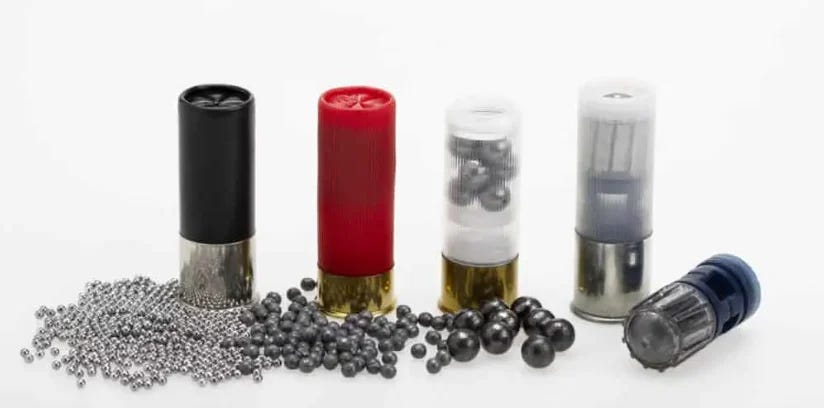
Shotguns are underrated in the preparedness conversation, and the gauge question is simpler than the rifle and handgun debates.
12 gauge is to shotguns what 9mm is to handguns: the most common option by enough of a margin that the conversation mostly starts and ends there. Part of what makes it so useful is the range of loads available, and those loads cover genuinely different jobs.
Birdshot, the lighter end of the spectrum with smaller pellets, is what most people think of for upland hunting, doves, quail, and waterfowl. It also has a place in home defense at very close range, where the spread is actually an asset. At longer distances the pellets lose energy fast, which limits its effectiveness, but inside a hallway or a room that is rarely a concern.
Buckshot is where the shotgun becomes a serious defensive tool. The most common defensive load is 00 (double-aught) buckshot, which sends multiple large pellets downrange with each pull of the trigger. It is devastating at close to moderate range and is what most law enforcement and military personnel have reached for when the shotgun was the tool for the job. If home defense or security is a consideration in your preparedness planning, buckshot is what you want on hand.
Slugs turn the shotgun into a single-projectile firearm capable of taking large game and engaging targets at longer distances than shot loads allow. A rifled slug from a smoothbore barrel is accurate enough to take deer at reasonable hunting distances. Some states actually require hunters to use slugs rather than rifles in densely populated areas, which is worth knowing if you are in one of them. Slugs also give the shotgun a capability against barriers and vehicles that shot loads simply do not have.
Speaking of hunting regulations: most states have specific rules about minimum calibers or projectile types for taking certain game ethically. These rules exist for good reasons and are generally worth following. That said, if the scenario you are preparing for involves a genuine collapse of civil infrastructure, the difference between a legal and an illegal deer harvest is going to matter a lot less than whether your family eats. Laws are products of functioning societies. If the society stops functioning, those laws become closer to suggestions, and the ethics of the situation revert to something more fundamental: can you take the animal cleanly and not waste it. Plan within the law now. Understand that the law may not be the governing framework later.
20 gauge is a legitimate choice, particularly for smaller-framed shooters who find 12 gauge recoil genuinely difficult to manage. There is no shame in that calculation. A firearm you can shoot accurately and comfortably is worth more than one you flinch behind. But 20 gauge is less common, stocked in smaller quantities, and offers a narrower selection of loads.
Everything else, .410, 16 gauge, 28 gauge, gets progressively harder to find in normal times and dramatically harder in disrupted ones. These are not preparedness choices unless you already own the firearm and are building around an existing situation.
If you are starting fresh, 12 gauge is the answer. If you have a compelling reason to go 20 gauge, that is defensible. Beyond that, you are making your logistics harder for benefits that do not outweigh the cost.
A Word on .22 LR
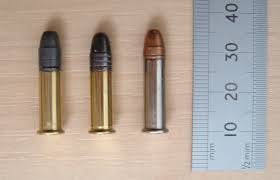
No caliber discussion aimed at practical preparedness is complete without mentioning .22 Long Rifle, and not for the reasons people usually argue about it.
.22 LR is not a defensive cartridge in any serious sense. Anyone telling you to rely on it for personal protection in a collapse scenario is steering you wrong.
What it is, however, is the most produced cartridge in the history of firearms. It is cheap enough that people buy it by the brick. It exists in drawers, sheds, and storage rooms all over the country in quantities that dwarf almost any other round. Firearms chambered for it are common, inexpensive, and mechanically simple.
For hunting small game, for training new shooters cheaply, for a kid learning fundamentals, and for trading in a barter economy, .22 LR has genuine value. It should not be your primary defensive caliber. But a .22 rifle or pistol as part of a broader setup is not a bad call, and the ammunition’s availability makes it worth keeping in mind.
Ammunition as Currency
There is one more angle on this that most people do not think about until they are already in the middle of it.
Ammunition has real barter value in a disruption scenario, and that is worth factoring into how much you hold and what calibers you stock.
Here is a real example of how this plays out. Say you sell a few firearms during a rough financial stretch, maybe to free up cash, maybe to consolidate down to calibers you actually use. Sensible decisions. Then you find a stash of ammunition for guns you no longer own. Now what?
You have a few options. Sell it now while the market is stable and you can get a fair price. Or hold it, because ammunition in common calibers has historically been one of the more reliable stores of value in uncertain times. People who need it will trade real things for it. Food, tools, labor, medical supplies. In a world where the normal economy is disrupted, ammunition for common calibers is a known quantity with understood value, which is more than you can say for a lot of things.
This is another reason to think carefully about which calibers you stock. Exotic or uncommon ammunition has limited barter appeal because the person across from you may not have a firearm that shoots it. Common calibers, 9mm, 5.56, 12 gauge, .22 LR, have wide enough distribution that almost anyone with a firearm can use them. That makes them more liquid as trade goods.
The .22 LR case is particularly worth noting here. It is cheap enough to accumulate in large quantities under normal circumstances, takes up very little space, and nearly everyone with any firearms history has something that shoots it. A brick of .22 LR is a practical and portable unit of trade in a way that a box of 6.5 Creedmoor simply is not.
None of this means you should be stockpiling ammunition you do not shoot yourself with the sole intention of trading it. But if you already have surplus in common calibers, there is a reasonable argument for holding it rather than liquidating it, particularly if the trends discussed in the first post in this series continue in the direction they appear to be heading.
Putting It Together
The framework is simple enough to write on a notecard.
Start with what is most common in your region. Talk to people at local gun stores and ranges about what actually moves off shelves, what gets restocked fastest, and what people around you are already shooting. That regional knowledge matters more than any national average.
Prioritize platforms with deep parts and knowledge bases. The more people who own a given rifle or pistol platform, the more likely you are to find someone who can fix it, find spare parts, or loan you a magazine when yours cracks.
Think in terms of your specific roles. A handgun for everyday carry and close-range defense, a rifle for longer-range situations, a shotgun if hunting or home defense versatility matters to you. Not everyone needs all three. Figure out what your actual situation calls for and build from there.
Avoid the collector trap. Every caliber you add is another logistics problem. Depth in a few common cartridges beats breadth across a dozen obscure ones every time.
And finally, ammunition you have is worth more than ammunition that is theoretically superior. Whatever you choose, buy enough to train seriously and maintain a meaningful reserve. The best cartridge in the world is useless if you have forty rounds of it.
The caliber wars are mostly people arguing about the last ten percent. Get the first ninety percent right and most of the rest takes care of itself.
 | A guest post by
|